Vertical container loading for bulk logistics and export
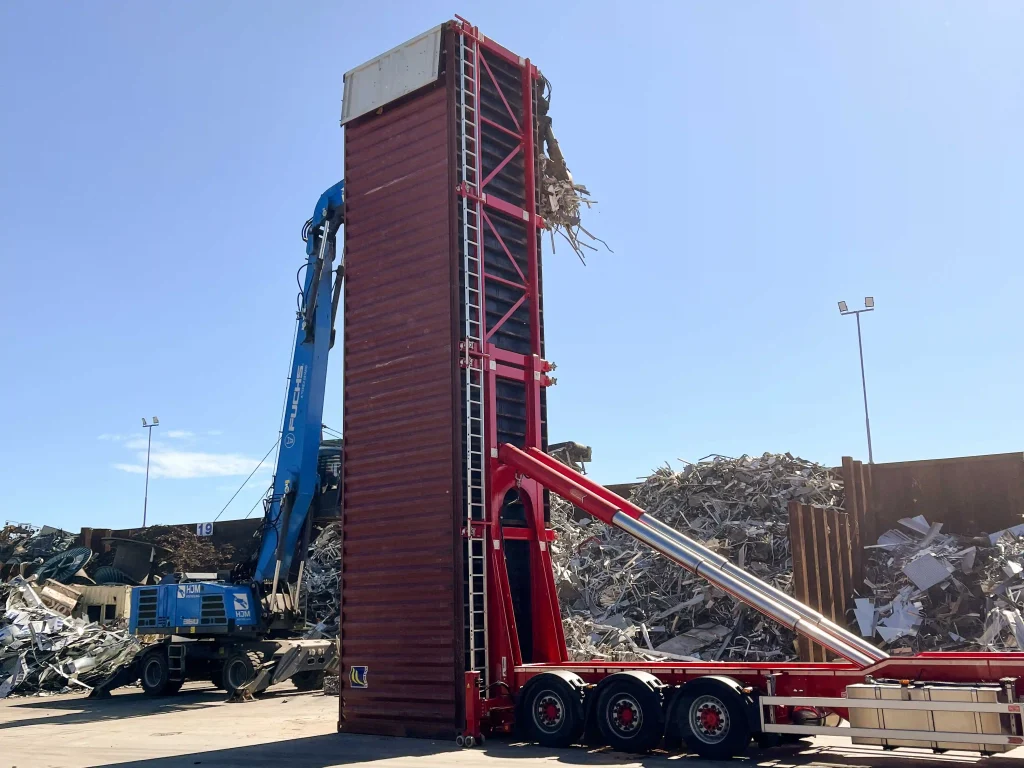
For companies exporting loose bulk materials in ISO containers, loading efficiency directly affects container utilisation, handling time and the number of transport movements. VAKO develops mobile, stationary and custom-engineered vertical loading solutions around the material, container flow, loading locations and existing equipment.
Why vertical loading
Why vertical loading works for bulk logistics and export
Actual results depend on the material, current fill rate, container payload limits and operating conditions.
Higher container utilisation
Loading loose bulk from above helps suitable materials use more of the available container volume.
Fewer transport movements
Better use of container capacity can reduce the transport movements needed for the same annual export volume.
Faster loading cycles
A repeatable loading cycle can shorten loading times and keep containers moving through the yard.
Efficient loading from above
A loading concept matched to the site reduces unnecessary repositioning and handling steps.
Controlled, repeatable loading
A repeatable cycle supports coordinated container positioning, loading and dispatch.
Built around your operation
VAKO develops mobile, stationary and custom-integrated solutions for different materials, loading points and container flows.
Applications
Materials and applications
Application suitability depends on the material characteristics, container flow, site layout and safety requirements.
International bulk export
Loose bulk materials loaded into ISO containers for transport by road, rail or sea.
Recurring container flows
Operations where predictable loading and container exchange are commercially important.
Multi-material operations
Sites handling different materials that require a flexible and well-defined loading setup.
Fixed loading points
Dedicated locations connected to existing hoppers, conveyors, silos or other equipment.
Flexible mobile locations
Yards where one loader must move between loading points or operating areas.
Suitable VAKO solutions
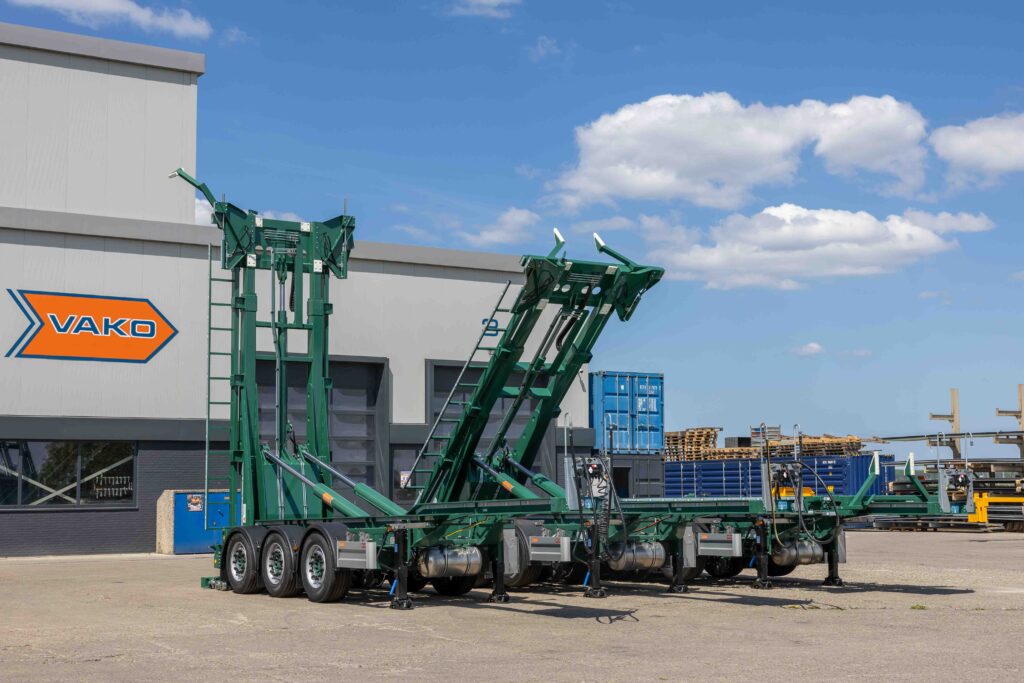
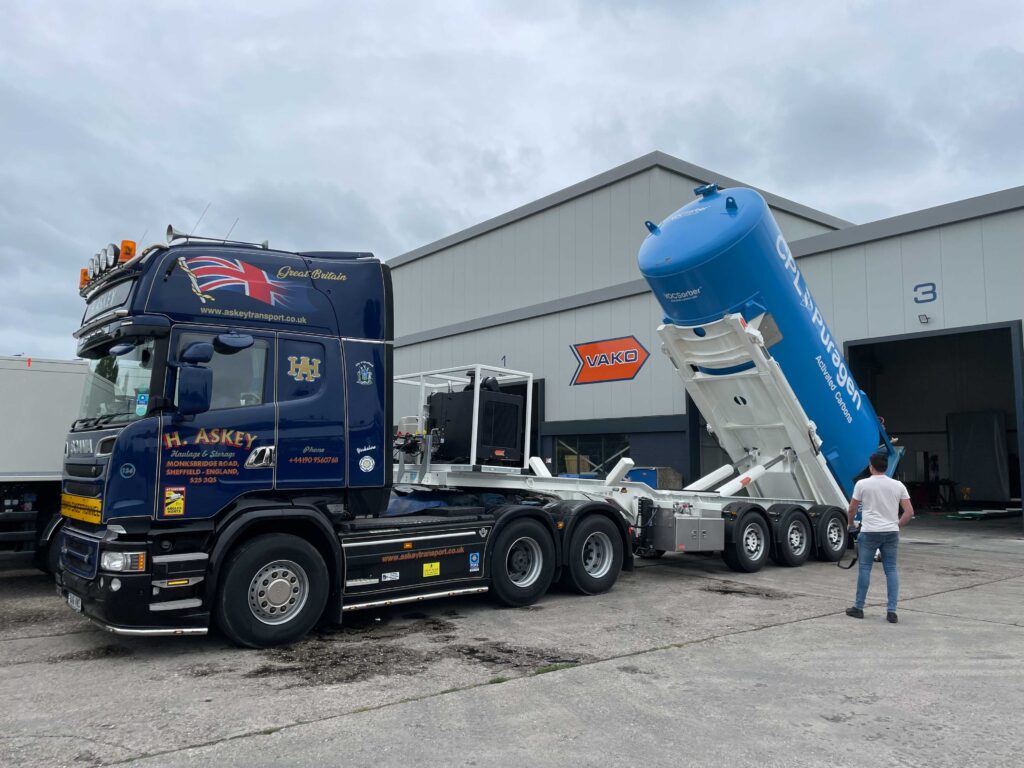
Mobile, stationary and integrated loading solutions
The right VAKO solution depends on container size, loading frequency, material characteristics, site layout and the required level of process integration.
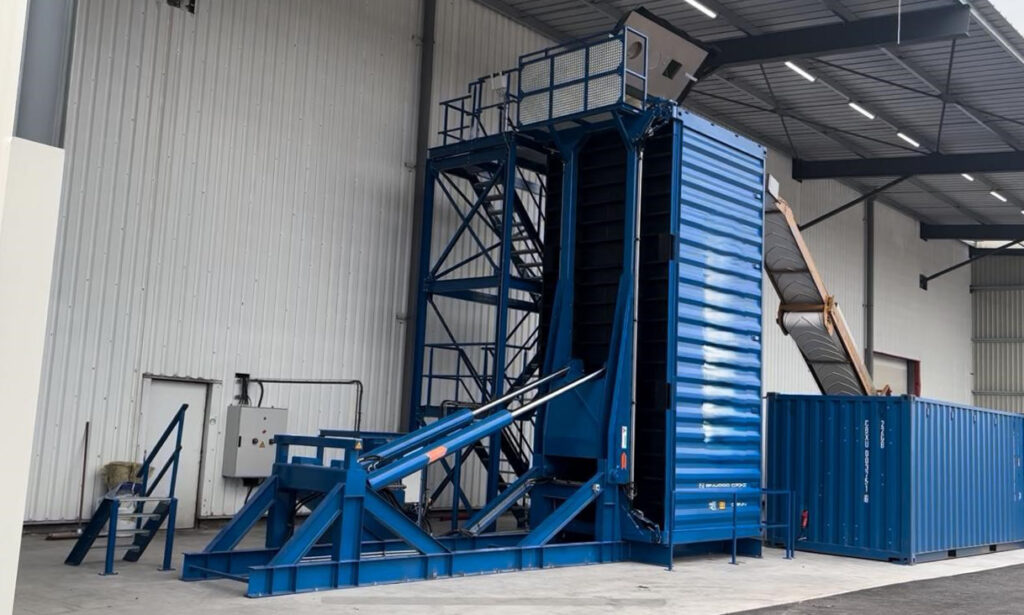
Engineered around your operation
Every loading operation is different. VAKO assesses the material, container flow, loading frequency, site layout, required throughput and existing equipment before engineering the vertical loading solution.
Where required, the system can be customised with project-specific interfaces for conveyors, hoppers, weighing, controls, door handling and other existing equipment.
Calculate the potential benefit
The VAKO calculator provides an initial indication of how vertical loading could affect container utilisation, transport movements and transport costs.
The result is indicative and remains dependent on the material, payload limits and final system configuration.
In practice
Vertical loading in practice
Coffee-bean transfer
VAKO engineered a stationary transfer solution that unloads coffee beans into storage, so shipping-line containers can be returned quickly and the product supplied to production later. Project result: faster container turnaround and a more flexible product flow.
View the projectFAQ
Frequently asked questions about bulk export loading
Which bulk export applications can use vertical loading?
Vertical loading can suit recurring bulk export flows, fixed loading points and operations with multiple loading locations. Suitability still depends on the material and existing process.
Can VAKO connect the loader to existing equipment?
Yes. VAKO can engineer project-specific interfaces for conveyors, hoppers, weighing, controls, door handling and other existing equipment.
Should we choose a mobile or stationary solution?
A mobile loader offers flexibility between loading locations. A stationary solution is generally better suited to fixed loading points and deeper process integration.
Bring us your bulk export loading challenge
Tell us what material you load, which container size you use, how many containers you handle and how your current loading process works. VAKO can assess your material and container flow to determine which mobile, stationary or custom vertical loading solution fits best.