Whitepaper 1 · VAKO Transport Systems B.V. · Construction, Civil Engineering & Infrastructure Sector
Reduce daily load-covering friction by 20–40 minutes per vehicle while improving safety and site discipline.
This whitepaper explains why load covering is no longer a secondary transport task in construction, civil engineering, and infrastructure logistics. In high-frequency bulk transport, small daily inefficiencies become measurable losses in safety, consistency, compliance confidence, and fleet performance.
Repetitive manual or inconvenient covering routines increase handling exposure, slow departures, reduce process discipline, and make load containment harder to standardise across a fleet.
daily time-saving potential per vehicle
less manual covering exposure
fewer avoidable cycle interruptions
What you’ll discover
A practical sector analysis of where cover systems create value in demanding bulk transport operations.
Why covering routines matter in high-frequency construction transport.
How small repeated friction points affect efficiency, usability, and fleet consistency.
Why application-specific cover systems support safer, cleaner, and more controlled transport.
Relevant VAKO sectors
Why load covering quietly affects fleet profitability
In construction and infrastructure transport, vehicles operate under mud, dust, rain, congestion, time pressure, and changing site conditions. If covering a load is slow, awkward, manual, or inconsistent, that weakness is repeated across every route, every vehicle, and every working day.
What changes after a stronger cover system strategy?
Covering time per cycle
Manual handling exposure
Daily workflow interruptions
Fleet presentation and containment
Continue with the full whitepaper
Below, you’ll find the complete sector analysis: subject overview, operational pressure, commercial relevance, the role of cover systems, where VAKO fits, operational and commercial value, best-fit applications, and conclusion.
Full Whitepaper
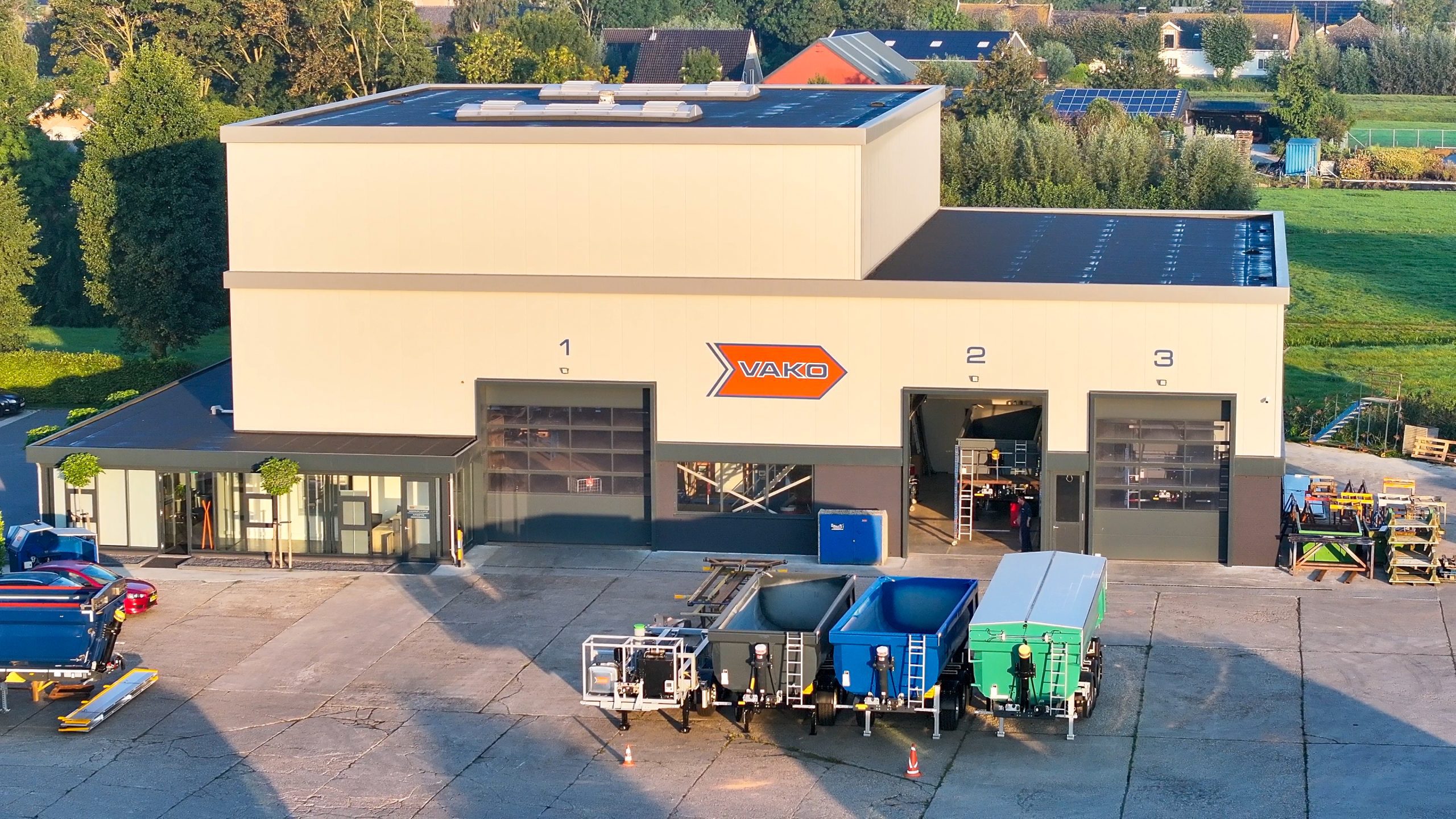
VAKO Transport Systems B.V. has established itself as a pioneer in Europe international markets by addressing the complex logistical challenges inherent in the Construction, Civil Engineering & Infrastructure Sector. This Sector Solution Presentation explores the range in which our product catalogue implements smoothly in the sector of Construction, Civil Engineering & Infrastructure Sector.
This is a sector defined by intensive transport cycles, bulk material movement, and demanding day-to-day operating conditions. Vehicles are expected to move quickly between loading points, roads, depots, and worksites while maintaining safety, reliability, and control.
In this environment, load covering is not a secondary task — it is part of a fleet’s daily efficiency, usability, compliance confidence, and professional performance.
The transport reality of this sector creates a clear application case for cover system solutions. High-frequency movement of aggregates, soil, rubble, asphalt, and demolition materials places continuous pressure on vehicle usability and load security. Exposure to weather, road conditions, site access constraints, and repetitive loading cycles means that even small inefficiencies in the covering process can become commercially relevant across a fleet. This document examines where VAKO’s cover system solutions align with the operational demands of the sector, and how they can support a safer, more controlled, and more efficient transport process in daily use.
This document is created to provide valuable insight for fleet owners, operations managers, transport managers, infrastructure contractors, construction logistics teams, and decision-makers responsible for safety, efficiency, and vehicle uptime.
Challenges in 2026: Cover Systems in Construction, Civil Engineering & Infrastructure Transport
Subject Overview
The transport profile of this sector is defined by repetition, harshness, and variation at the same time. Fleets may work with tippers, tipper trailers, hooklift bodies, low containers, and related bulk transport configurations, but regardless of vehicle type, the basic operating conditions are similar.
Materials such as sand, gravel, rubble, soil, demolition fractions, asphalt-related loads, and aggregates must be moved in a way that balances speed with control. Routes are not always long, but they are operationally dense. They involve frequent starts and stops, varying loading profiles, mixed road environments, and direct exposure to site conditions.
Vehicles do not operate in ideal laboratory circumstances. They operate in mud, dust, rain, congestion, and time pressure.
That is precisely why small equipment choices carry disproportionate operational weight. In a lower-intensity transport setting, an awkward covering method may be tolerated for longer. In construction and infrastructure logistics, it tends to reveal its weaknesses much faster. If a cover system requires too much manual effort, drivers feel it every day. If it is slow, dispatch feels it every day. If it is fragile, the workshop feels it every day. If it does not close well or does not suit the body type properly, the fleet’s discipline becomes inconsistent in daily use. The question is therefore not simply whether a load can be covered. The more relevant question is whether it can be covered in a way that keeps pace with the real operating model of the fleet.
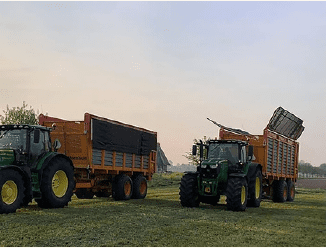
The Operational Pressure Behind Load Covering
The first area of friction is usually manual effort. Any covering process that asks drivers to do more than the operation really requires introduces unnecessary strain into the day. In lower-frequency use cases this may be tolerated. In intensive bulk logistics, it becomes visible much faster — not only as an ergonomic issue, but as a consistency issue. Once a task feels inconvenient, the process begins to rely more on operator behaviour than on engineered workflow.
That matters not only operationally, but also in the context of European workplace safety principles. Under the broader EU occupational safety framework and the specific directive on manual handling, employers are expected to organise work in a way that reduces avoidable physical strain and limits unnecessary manual handling where practical alternatives exist. In a transport context, that makes repetitive manual covering increasingly difficult to defend as a “neutral” operational routine when more controlled mechanical alternatives are available.
The second area is time loss. In construction and infrastructure-related transport, the economics of the fleet are strongly related by how smoothly each cycle connects to the next. Time is not lost only in major delays. It is also lost in repeated small interruptions: a slower departure from the loading point, extra repositioning, hesitation around a system that is awkward to use, or the need to correct a cover that does not behave predictably. None of those moments seem strategically significant on their own. Across a fleet, they are.
The third area is containment and cleanliness. This is not only an operational issue. It is also a matter of road safety, public exposure, and transport discipline. Loads that are not securely and consistently covered can create avoidable material escape, dust nuisance, and debris loss during transit. In sectors where public roads, project sites, customers, contractors, and local authorities all interact, cleanliness and control are not superficial. They contribute directly to how professionally and responsibly a fleet is perceived.
This also has a clear regulatory backdrop. At EU level, roadside inspection and cargo securing rules make clear that cargo must be secured in such a way that it does not endanger people, property, or the environment, and that loads must not leave the cargo space or shift in a way that compromises safe operation. The relevant framework under Directive 2014/47/EU also references recognised securing principles and technical standards such as EN 12195-1, EN 12640, EN 12642, and EN 12641, which are directly relevant to how vehicles, body structures, systems, and securing methods are assessed in practice.
For operators in Construction, Civil Engineering & Infrastructure Logistics, that means covering systems are not simply “helpful accessories.” They sit close to a wider expectation of controlled, roadworthy, and professionally secured transport.
The fourth area is maintenance logic. Poorly matched or low-end covering solutions often look acceptable at the point of purchase because they appear to solve the immediate requirement. Their weakness only becomes fully visible in repeated use. They require more adjustment, deteriorate faster, or fit the body and operating pattern less precisely than needed. The result is not dramatic system failure every day. More often, it is steady work irritation and avoidable downtime. This is exactly the kind of hidden operational tax that stronger engineering is supposed to remove.
Why This Matters Commercially
The commercial relevance of cover systems in this sector is therefore broader than the category name suggests. These systems do not only cover a load. They shape a recurring part of the transport routine that touches labour efficiency, driver experience, fleet appearance, process control, cargo security, and operational confidence.
When that routine is engineered well, the gains tend to appear quietly but persistently. The fleet becomes easier to run. The process becomes easier to standardise. The driver has fewer friction points. The workload has fewer recurring frustrations. The vehicle presents itself more professionally to customers, partners, project environments, and the public road network. What matters commercially is that these gains are cumulative rather than theoretical. They do not need to be exaggerated to be meaningful.
They also become more relevant in a market where operators are increasingly expected to combine:
- safe working methods,
- reliable cargo control,
- cleaner transport behaviour,
- and operational professionalism
within one repeatable fleet process.
That expectation is not driven by one single law alone. It is shaped by a broader European operating environment in which cargo securing, worker safety, and environmental exposure are increasingly treated as linked operational responsibilities rather than separate concerns. EU roadside inspection rules explicitly include cargo securing deficiencies as grounds for intervention, while broader air quality and particulate matter frameworks increase pressure on sectors associated with dust and loose-material movement.
This is where the strongest VAKO materials already provide the right commercial model. They do not rely on exaggerated product claims. Instead, they connect operational inefficiency to practical engineering benefit, then reinforce that link through measured outcomes and strategic interpretation. The aluminium scrap case does this by connecting loading inefficiency, safety exposure, and container damage to an engineered vertical loading solution, then translating that into measurable and strategic value.
That is the right approach for cover systems in this sector.
The strongest commercial case is not that a cover system is simply “better hardware.” It is that a well-engineered cover system helps bring a high-friction, compliance-sensitive, and labour-dependent part of the transport cycle under better operational control.
The Role of Cover Systems in Modern Fleet Operations
A modern cover system, properly understood, is not an accessory. It is part of the fleet’s control architecture. It helps define how consistently the vehicle can move from loaded to road-ready condition. In sectors where loose bulk materials are moved intensively, that role becomes more important because the load profile is often variable, the operating environment is harsh, and the frequency of use is high.
This is where the category itself deserves to be positioned more intelligently. The relevant comparison is not between “cover” and “no cover” in an abstract sense. The more useful comparison is between transport routines that remain partially improvised around the covering step, and transport routines where that step has been made repeatable, durable, and easier to integrate into daily use. Once the category is framed this way, the commercial logic becomes much clearer. The operator is not simply investing in a lid or panel system. The operator is reducing one of the recurring weak points in the transport cycle.
This Is Where We Fit
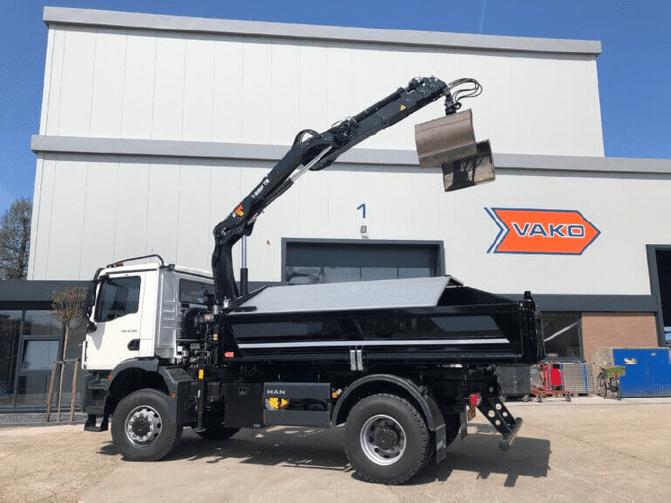
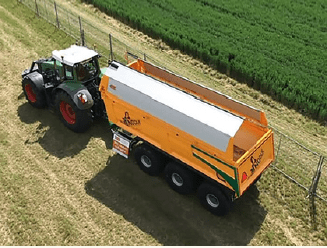
Within this operational context, our cover system solutions are designed to integrate directly into the daily transport reality.
We develop and supply hydraulic cover systems built around:
- practical usability in repetitive operations,
- durable aluminium construction,
- low-maintenance execution,
- and application-specific fit across tippers, trailers, container systems, and related body types.
Depending on the transport setup, different system configurations are applied. For example:
- systems suited for low container bodies and variable load heights,
- solutions that allow flexible cargo volume across tippers and trailers,
- or one-sided opening systems that maintain full side-board accessibility in demanding unloading conditions.
The objective is not to offer a generic covering solution, but to ensure that the system fits the vehicle, the load profile, and the daily operating rhythm of the fleet. That distinction is important.
In this sector, the value of a cover system is not defined by its presence, but by how it performs under real conditions. Operators do not evaluate these systems in isolation. They evaluate them based on:
- how easily they can be used throughout the day,
- how reliably they function across changing conditions,
- how well they integrate into existing vehicles,
- and whether they reduce friction rather than introduce it.
This is where a more application-driven approach becomes relevant. A cover system should not behave like an aftermarket add-on. It should behave like a natural extension of the vehicle’s working process.
There is also a practical consideration around implementation. Improvements that disrupt the fleet are rarely adopted, even if they solve a real problem. That is why installation and retrofit logic matter. Systems must be designed and delivered in a way that allows integration with limited operational downtime, so that improvements can be introduced without interrupting daily transport continuity.
In that sense, the role of a cover system is not only to close a load. It is to support a more controlled, repeatable, and operationally stable transport process.
Operational and Commercial Value
For this sector, the most persuasive value case is not built on dramatic promises. It is built on the reduction of friction. A stronger cover system can make the covering step easier to execute, easier to repeat, and easier to standardise. At the same time decreasing on-site injury risks for workers. That in turn supports lower manual involvement, smoother departures from the loading point, better load containment, and more consistent fleet presentation. In commercial terms, that means improved continuity rather than spectacular transformation.
Some value areas are especially relevant. The first is usability. A system that is easier to use consistently tends to be used more consistently. That sounds simple, but it is commercially important. There is value in a technically capable system that operators treat as inconvenient in daily work. The second is durability. In a rough-use sector, robustness is not a nice-to-have. It is part of the economic logic of the purchase. The third is fit. A strong system should work with the body, the material profile, and the operating rhythm of the fleet, rather than forcing the fleet to work around it.
This is also where VAKO’s own positioning supports the narrative. The company emphasises durable construction, low-maintenance products, and fit for heavy-duty operation, and it frames its systems as practical responses to real transport applications rather than abstract feature sets. Even the customer language visible on the site leans in that direction, referring to a proven and solid cover system that aligns well with tipper applications.
We are truely excited. But because this is a first-edition Sector Solution Presentation, rather than a finished industry case history, it is important to stay disciplined about quantification.
The value logic is strong, but it should be expressed carefully. The most credible claims at this stage are not sweeping percentage statements for the whole market. They are statements about likely value zones: lower manual handling exposure, stronger process consistency, reduced daily inconvenience, more controlled load coverage, and improved fleet professionalism. Where VAKO later develops this sector piece into customer-specific proof cases, those value zones can then be substantiated with measured before-and-after data in the same style as the uploaded case studies, which you are able to find on our website: use a calm combination of metrics, qualitative benefits, and strategic outcomes.
Best-Fit Applications
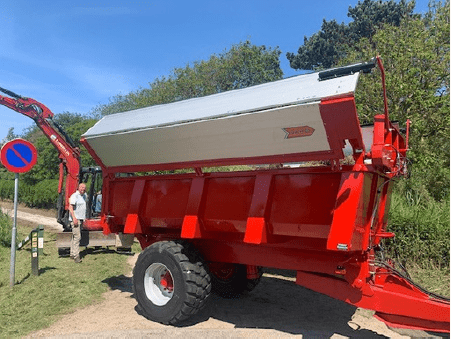
The strongest fit is likely to be found in fleets where load covering is not incidental but structurally repetitive. Tipper operators moving aggregates, soil, rubble, and related loose materials are an obvious example, especially where the day consists of repeated short or regional cycles and vehicles move regularly between loading points, public roads, and active projects.
Hooklift and container-based bulk transport operations also present a strong fit where body configuration, repetitive use, and practical robustness matter more than an initial purchase price.
Infrastructure support fleets, recycling-linked construction transport, and earthmoving logistics are similarly strong environments because they combine harsh conditions, schedule pressure, and operational repetition.
The fit becomes weaker as the role of covering becomes less central to the transport process. Fleets with only occasional loose bulk movement, or operations where covering is rare rather than habitual, may still be technically suitable but commercially less urgent. The best opportunities are not simply the fleets that could use a cover system. They are the fleets where a better cover system would be felt almost every day.
Conclusion
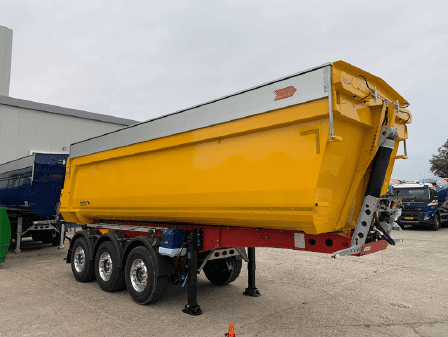
In Construction, Civil Engineering & Infrastructure Logistics, transport performance is rarely defined by one major factor alone. More often, it is shaped by the quality of the operational system as a whole. Fleets perform better when the repeated parts of the daily process are organised in a way that reduces friction, supports continuity, and keeps the operation under control.
At first glance, covering a load may seem like a secondary transport task. In practice, however, it sits at the intersection of some of the most commercially important aspects of fleet operation: driver usability, process speed, load containment, safety, professionalism, and operational consistency. Where that process is weak, the impact is rarely dramatic in one isolated moment. Instead, it appears repeatedly — in slower dispatch, avoidable manual effort, inconsistent fleet discipline, maintenance irritation, and a lower level of control across the operation.
For this sector, those are not minor issues. They are structural ones.
Construction, Civil Engineering & Infrastructure Logistics demands transport systems that can function under repeated use, under pressure, and under imperfect real-world conditions. Vehicles are exposed to changing site access, variable loading conditions, weather, dust, debris, and rough material flows. In that environment, the quality of the covering process is not peripheral. It becomes part of the fleet’s wider operational maturity. That is where we add value.
We do not see cover systems as accessories added to the edge of the vehicle. We see them as part of the operational architecture of the transport process itself. When designed and applied correctly, they help transform a recurring weak point into a more stable, more controlled, and more repeatable part of the fleet’s daily routine.
That value begins with usability. A covering process that is easier to operate is more likely to be used consistently, more likely to support driver discipline, and more likely to function as intended under daily working conditions. In a high-frequency transport environment, consistency is commercially powerful.
It also extends into reliability. In this sector, systems are not judged only on how they perform when new or under ideal conditions. They are judged on how they hold up under real pressure: repeated cycles, variable materials, changing drivers, difficult weather, and demanding work environments. A well-engineered cover system therefore adds value not only by functioning, but by continuing to function without becoming a recurring source of adjustment, frustration, or avoidable downtime.
Another important value area is process control. Fleets in this sector operate under growing pressure to combine efficiency with safety, cleanliness, and operational professionalism. Expectations are rising not only from within the transport business itself, but also from customers, project environments, public-road exposure, and the wider regulatory context. In that setting, a better covering process is not simply a practical improvement. It contributes to a more controlled and more credible operation overall.
The value we add lies in the combination of engineering relevance, practical applicability, and operational understanding.
We are not simply interested in whether a system can technically be installed. We are interested in whether it will genuinely improve the transport process once the vehicle returns to daily use.
That is why our approach is built around fit:
- fit to the vehicle,
- fit to the load profile,
- fit to the rhythm of the operation,
- fit to the commercial reality of the fleet.
For some operators, that means improving ease of use. For others, it means reducing manual effort, increasing consistency, improving professionalism, or supporting a cleaner and more controlled loading process. The value does not always appear in one spectacular metric. More often, it appears through a more stable and lower-friction operation overall.
And in a sector defined by repetition, that matters more than it first appears.
Our vision is to contribute to the transport sector in which operational systems are not treated as afterthoughts, but as strategic enablers of safer, more efficient, and more professional logistics.
Our mission is to develop and deliver transport system solutions that solve real operational challenges in a practical, durable, and application-driven way. That means focusing on systems that support the daily reality of operators — not only in theory, but in the conditions where the vehicle actually works.
Within the context of cover systems, that mission is clear: to help operators bring one of the most repeated and often underestimated parts of the transport cycle under better control.
Our goal in this sector is not simply to place more systems into the market.
Our goal is to become a relevant and trusted engineering partner for operators who want to strengthen the quality of their transport operation.
That means helping fleets move from:
- manual to more controlled,
- inconsistent to more repeatable,
- improvised to more engineered,
- reactive to more operationally stable.
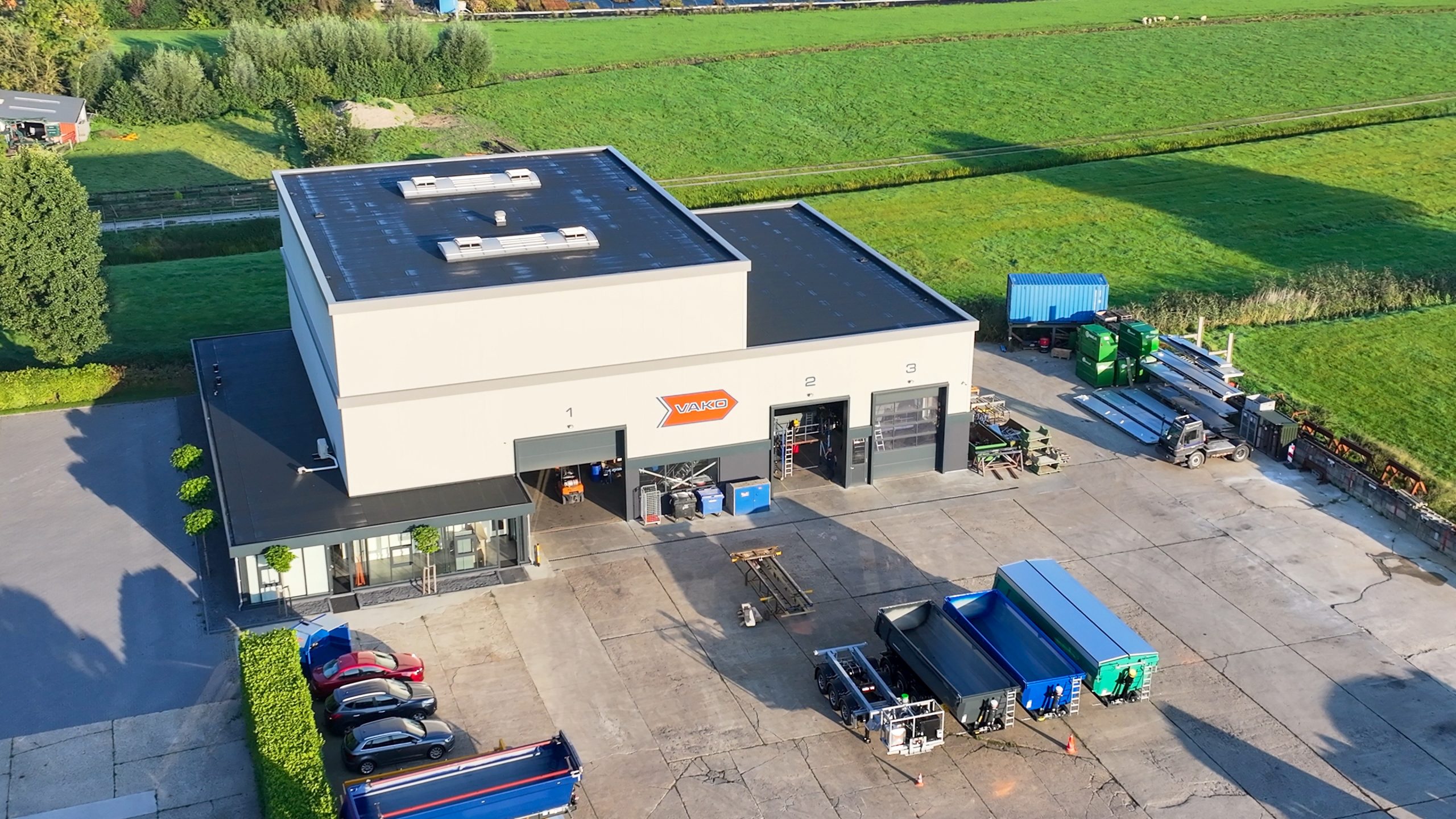
Feel free to talk with us directly via phone, whether it’s our sales department or one of our engineers. You are more than welcome to fill in our form to schedule a call with us via:
https://www.vakocontainerhandling.com/contact/
VAKO Transport Systems B.V.
Hondsdijk 3a
2396 HG Koudekerk aan den Rijn
The Netherlands
Phone number: 0031 (0) 71 – 341 07 05
Email: info@vakocontainerhandling.com
www.vakocontainerhandling.com
www.vakotransportsystems.nl
See how much time and manual effort your fleet can reduce
Many construction and infrastructure fleets underestimate the daily impact of repeated covering friction, manual handling exposure, inconsistent routines, and load containment issues. Request a quick analysis based on your operation.
- Estimated daily covering time reduction per vehicle
- Indicative manual handling exposure reduction
- Application-fit recommendation for your vehicle and load profile
Our engineering team reviews each request manually — expect a response within 24 hours.
Prefer direct contact? Email us at info@vakocontainerhandling.com