Case Study · MSF01 Custom Trailer · Machinery & Industrial Automation
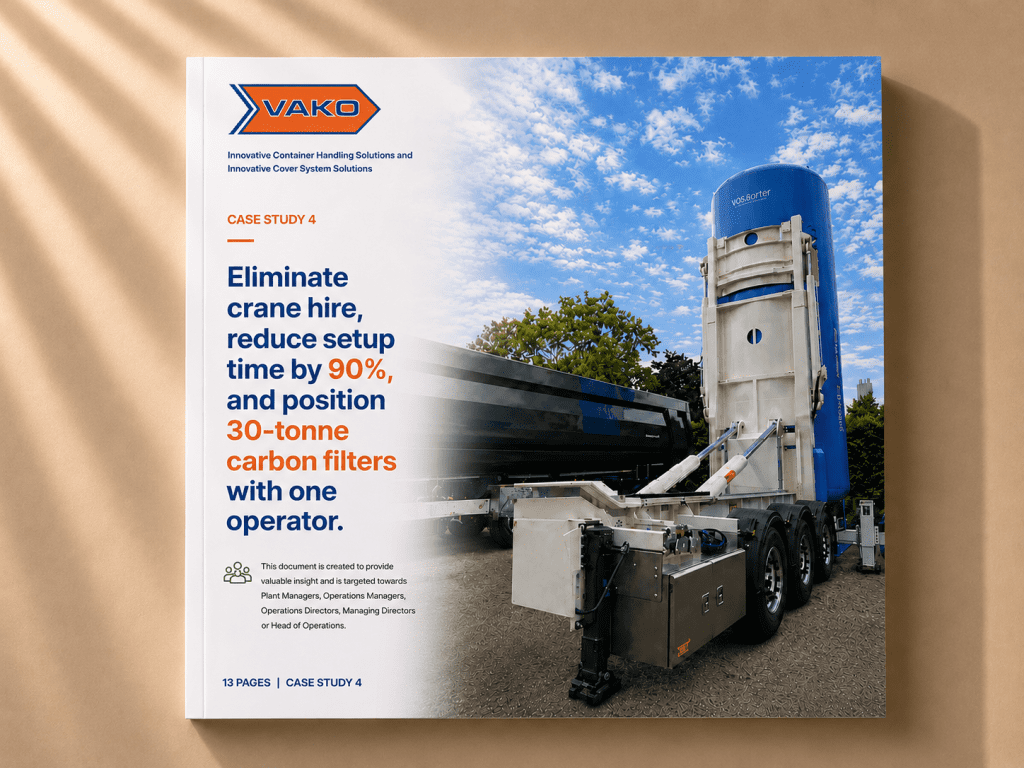
Eliminate crane hire, reduce setup time by 90%, and position 30-tonne carbon filters with one operator.
This case study shows how VAKO’s MSF01 Mobile Silo Loader helps industrial operations transport and vertically position 30-tonne carbon filters without external crane rentals or multi-person handling teams. How much uptime, cost control, and safety are you losing in your filter positioning process? Get the full breakdown and read it here.
Traditional carbon filter installation depends on separate transport trailers, crane contractors, manual rigging, and complex site coordination.
setup time reduction
labor savings
crane hire elimination
What you’ll discover
A practical breakdown of how mobile vertical positioning changes industrial filter logistics.
Why crane scheduling and manual rigging delay carbon filter exchange.
How the MSF01 combines transport and vertical positioning in one mobile system.
Faster setup, lower labor, zero crane hire, and safer carbon filter deployment.
Relevant VAKO sectors
Why traditional carbon filter positioning quietly reduces profitability
In machinery and industrial automation, every hour of downtime affects production, compliance, and operating margins. When filter exchange depends on external cranes, manual rigging, and multi-party planning, the transport phase becomes a bottleneck instead of a value-added workflow.
What changes after mobile vertical positioning?
Total setup & positioning time
Personnel required per operation
External equipment hire costs
Wait time for crane scheduling
Continue with the full case study
Below, you’ll find the complete breakdown: subject overview, market structure, background, problem statement, objectives, challenges, solution overview, implementation, methodology, results, before-after comparison, insights, ROI analysis, recommendations, and conclusion.
Full Case Study
VAKO Transport Systems B.V. has established itself as a pioneering force in the Benelux and European markets by addressing the complex logistical challenges inherent in the Machinery & Industrial Automation sector. This case study explores the implementation of the MSF01 Mobile Silo Loader, specifically configured for the vertical positioning of large-scale carbon filters.
By integrating advanced hydraulic engineering with mobile trailer technology, VAKO has eliminated the traditional reliance on external crane rentals and multi-person handling teams.
The MSF01 solution represents a strategic shift from passive transportation to active industrial automation. Through the ability to transport and autonomously erect 30-tonne filters into a vertical position, VAKO provides business partners with a closed-loop logistical system. This innovation significantly reduces operational overhead, enhances site safety by minimizing manual intervention, and ensures compliance with rigorous European safety standards, placing VAKO as an essential partner for long-term industrial projects.
This document is created to provide valuable insight and is targeted towards Plant Managers, Technical Directors, Operations Directors, Managing Director & COO’s.
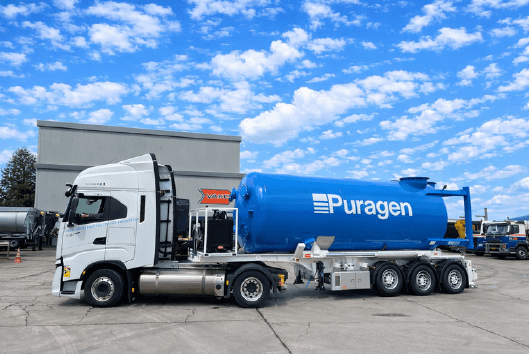
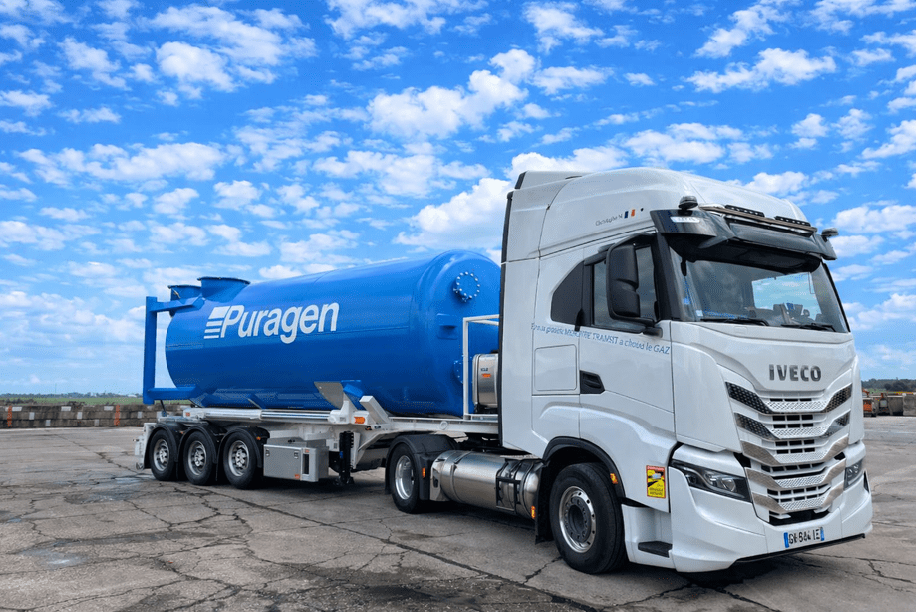
MSF01 Custom Trailer for Vertical Positioning of Carbon Filters for Puragen
Subject Overview
The Machinery & Industrial Automation sector is currently undergoing a period of rapid evolution, characterized by the demand for higher throughput and reduced downtime. As industrial facilities grow in complexity, the components required to maintain them—such as massive carbon filtration units for environmental compliance — have become larger and more difficult to manage. Modern supply chains now require transport systems that do more than move goods; they must integrate seamlessly into the installation and maintenance workflows of the end-user.
Specialized transport systems like the MSF01 are critical in this new landscape. They bridge the gap between heavy-duty logistics and precision engineering. By providing a mobile platform that can handle vertical positioning, VAKO Transport Systems B.V. addresses the specific needs of industries dealing with bulk materials, hazardous fluid filtration, and chemical processing. This holistic approach to machinery handling ensures that the transport phase is no longer a bottleneck but a value-added component of the industrial lifecycle.
Market Structure and Operator Landscape
In the Benelux region and across Europe, the industrial landscape is dominated by high-tech manufacturing and stringent environmental regulations. This environment demands equipment that is not only robust but also highly intelligent. VAKO Transport Systems B.V. operates at the intersection of these demands, serving as an authoritative engineering leader. The competitive landscape is increasingly shifting away from generic transport providers toward specialized partners capable of delivering bespoke, automated handling solutions that comply with international quality standards.
Operators in the machinery sector face rising costs for specialized labor and machinery hire. By introducing the MSF01 Mobile Silo Loader, VAKO has redefined the role of the logistics operator. Instead of coordinating multiple third-party vendors for transport and lifting, a single operator can now manage the entire deployment process. This consolidation of capabilities strengthens VAKO’s market position, offering a unique value proposition that appeals to large-scale industrial contractors and facility managers seeking to streamline their vendor portfolios.
Background & Context
The handling of large-scale carbon filters presents unique engineering challenges. These units are often tall, heavy, and fragile in terms of their internal structural integrity. Traditionally, these filters are transported horizontally to maximize stability during transit but must be positioned vertically for operational use. This transition from horizontal to vertical has historically been the most dangerous and time-consuming phase of the installation process, requiring precise coordination and heavy-duty lifting equipment.
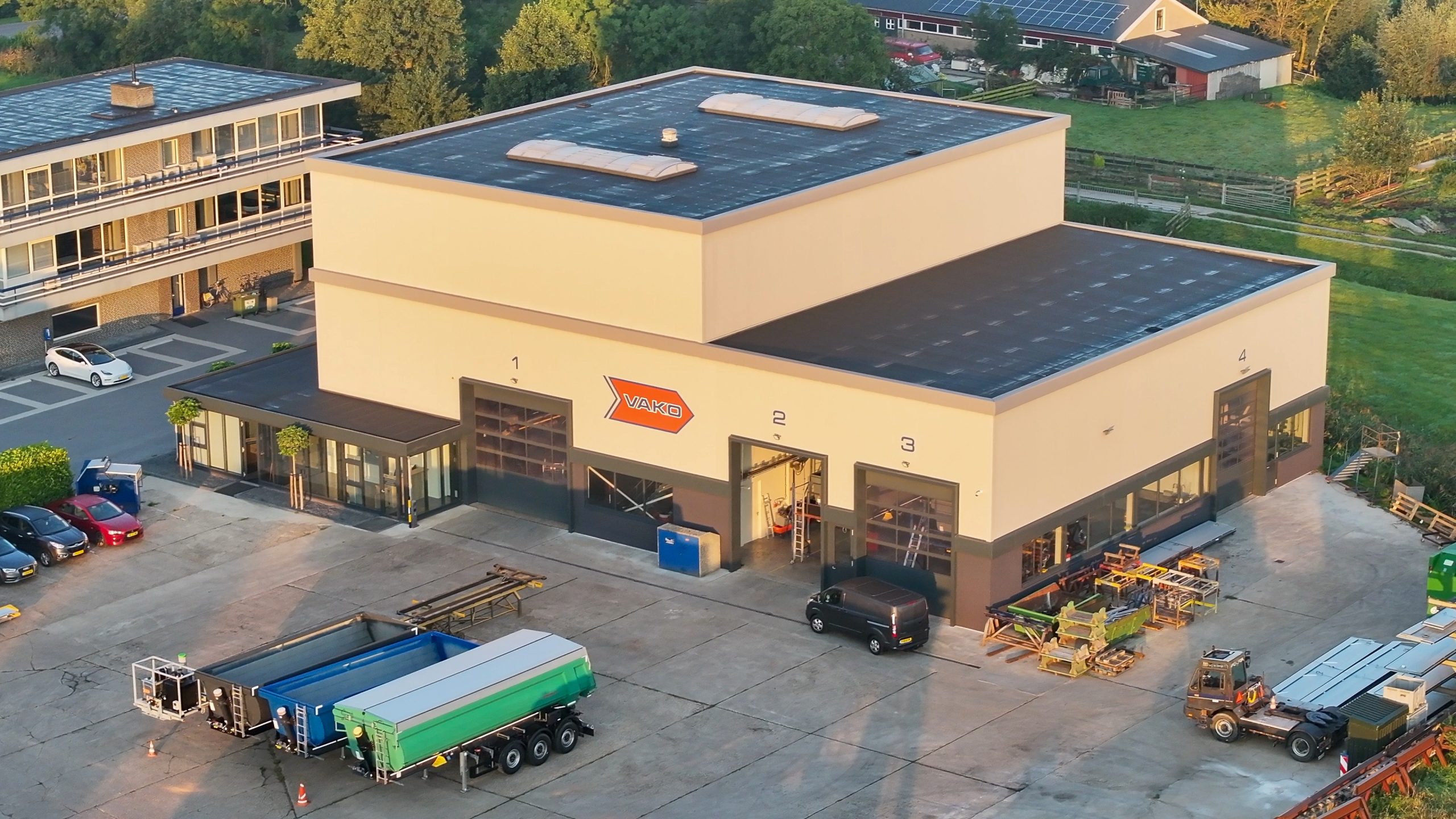
VAKO Transport Systems B.V. leverages decades of innovation in container handling and vertical loading to solve this specific problem. The MSF01 was developed as an evolution of VAKO’s existing vertical loader technology, adapted to accommodate the specific dimensions and weight distributions of industrial silos and filter units. This project showcases VAKO’s ability to translate complex mechanical requirements into a reliable, road-legal trailer system that functions as a mobile installation hub which can be used in Europe.
Problem Statement
Within the Machinery & Industrial Automation sector, companies frequently encounter significant pain points related to the deployment of large industrial components. The most prominent issues include:
- Logistics Inefficiencies: The need to synchronize the arrival of transport trailers with heavy-duty crane contractors, often leading to costly “waiting time” charges.
- High Operational Costs: Periodic maintenance of carbon filters requires frequent lifting operations, with crane rental costs often exceeding the value of the logistics itself.
- Manual Handling Risks: Traditional methods involve personnel working in close proximity to suspended loads, increasing the risk of workplace accidents and insurance liabilities.
Furthermore, many industrial sites have restricted space, making the setup of large outriggers for cranes impossible. This technical difficulty in vertical positioning often limits the throughput of filtration sites, as units cannot be swapped or serviced quickly enough to meet operational demands. VAKO Transport Systems B.V. identified these challenges as a clear opportunity for a disruptive, automated solution.
VAKO’s commitment to these regulations enhances trust with international partners.
The integration of fail-safe hydraulic systems and emergency stop protocols within the MSF01 design demonstrates a proactive approach to regulatory compliance. This ensures that the equipment can be deployed in diverse industrial environments—from chemical plants to food processing facilities—without requiring additional safety modifications or local certifications.
Objectives
Maximizing Operational Uptime
The primary objective of the MSF01 project was to create a system that minimizes the time required for filter exchange. In industrial automation, every hour of downtime translates to lost revenue. By enabling a single-operator deployment that takes minutes rather than hours, VAKO aims to ensure that filtration systems remain online for the maximum possible duration. This objective focuses on transforming the logistics chain into a high-speed service internal to the company’s operations.
To achieve this, the MSF01 was designed for fast precise setup. The integration of the hydraulic tilting mechanism directly into the trailer chassis allows the operator to begin the vertical positioning process immediately upon arrival at the site. This eliminates the multi-hour preparation phase usually associated with securing crane permits and setting up lifting gear, directly contributing to the client’s bottom-line efficiency.
Enhancing Workplace Safety
An equally vital objective was the elimination of high-risk manual handling tasks. VAKO sought to design a system where the operator could control the entire positioning process from a safe distance using a remote control. By removing the need for personnel to attach chains, guide suspended loads, or work beneath heavy machinery, VAKO drastically reduces the probability of workplace injuries.
The aim for safety extends to the stability of the vehicle during operation. The MSF01 is engineered with a low center of gravity and specialized stabilization systems to ensure that at the maximum 30-tonne load, the vertical positioning remains smooth and controlled. This objective aligns with the global trend toward “zero-harm” industrial environments, making the VAKO solution a preferred choice for safety-conscious corporations.
Challenges
Dynamic Weight Distribution
One of the most significant technical obstacles in developing the MSF01 was managing the shifting center of gravity during the transition from horizontal to vertical. As a 30-tonne carbon filter is raised, the forces exerted on the trailer chassis change dramatically. Engineering a frame that could withstand these torsional stresses while remaining light enough for standard European road transport required sophisticated finite element analysis and high-grade steel selection.
VAKO’s engineering team had to ensure that the pressure on the trailer’s axles and the tractor unit’s fifth wheel remained within safe legal limits throughout the tilting process. This challenge was met through a bespoke hydraulic geometry that distributes the load evenly across the trailer structure, preventing any single point of failure and ensuring the vehicle remains grounded during the entire operation.
Solution Overview
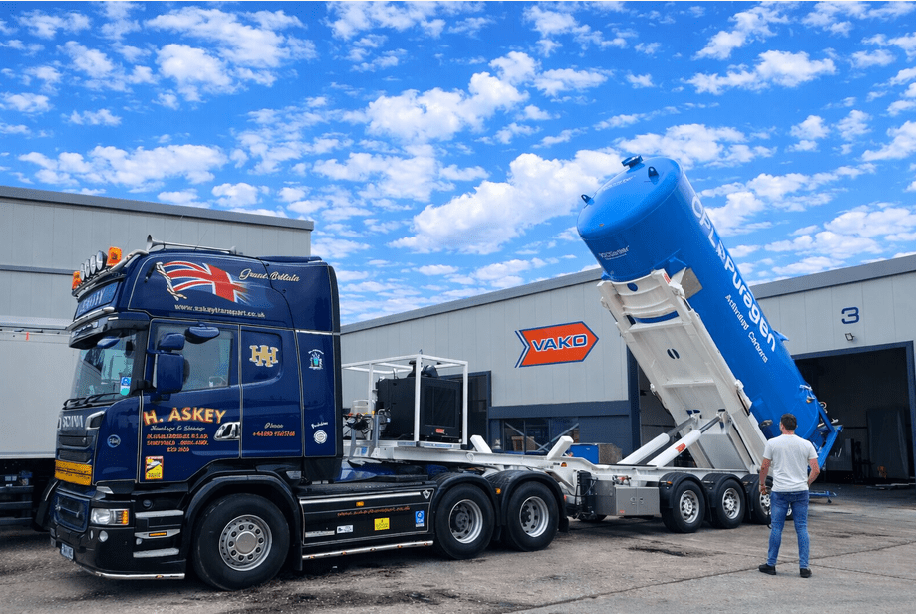
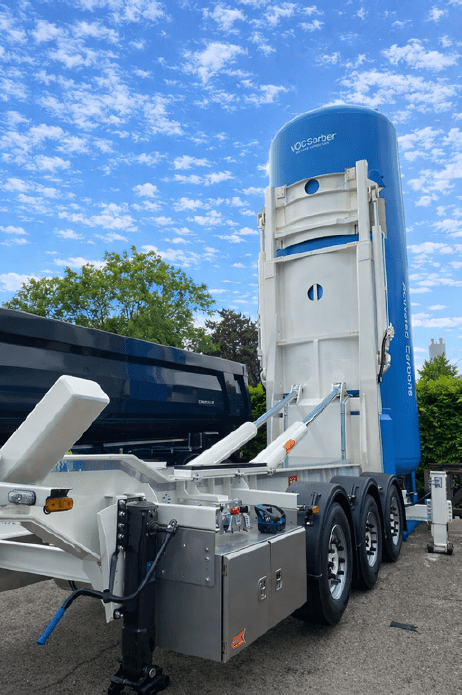
The VAKO MSF01 Mobile Silo Loader is a comprehensive solution designed to automate the transport and installation of heavy industrial silos and filters. At its core, the system consists of a specialized semi-trailer equipped with a powerful hydraulic tilting frame. Unlike standard trailers, the MSF01 is built to carry loads up to 30 tonnes and move them from a 0-degree horizontal transport position to a 90-degree vertical operational position autonomously.
The solution is distinguished by its mobility and independence. By incorporating the lifting mechanism into the trailer, VAKO has created a “machine on wheels.” The MSF01 handles the entire lifecycle of the transport process: loading at the factory, high-speed transit on European highways, and precision positioning at the destination. This integration eliminates the need for secondary lifting equipment, providing a significant competitive advantage in terms of cost and speed of deployment.
Implementation Process
Engineering and Customization Phase
The implementation began with a detailed analysis of the client’s carbon filter specifications. VAKO’s engineering department worked closely with the client to determine the optimal chassis configuration and hydraulic capacity. During this phase, 3D modeling was used to simulate the tilting process, ensuring that all clearances were maintained and that the structural integrity exceeded the required safety margins. This bespoke approach ensures that the MSF01 is perfectly matched to the specific industrial application.
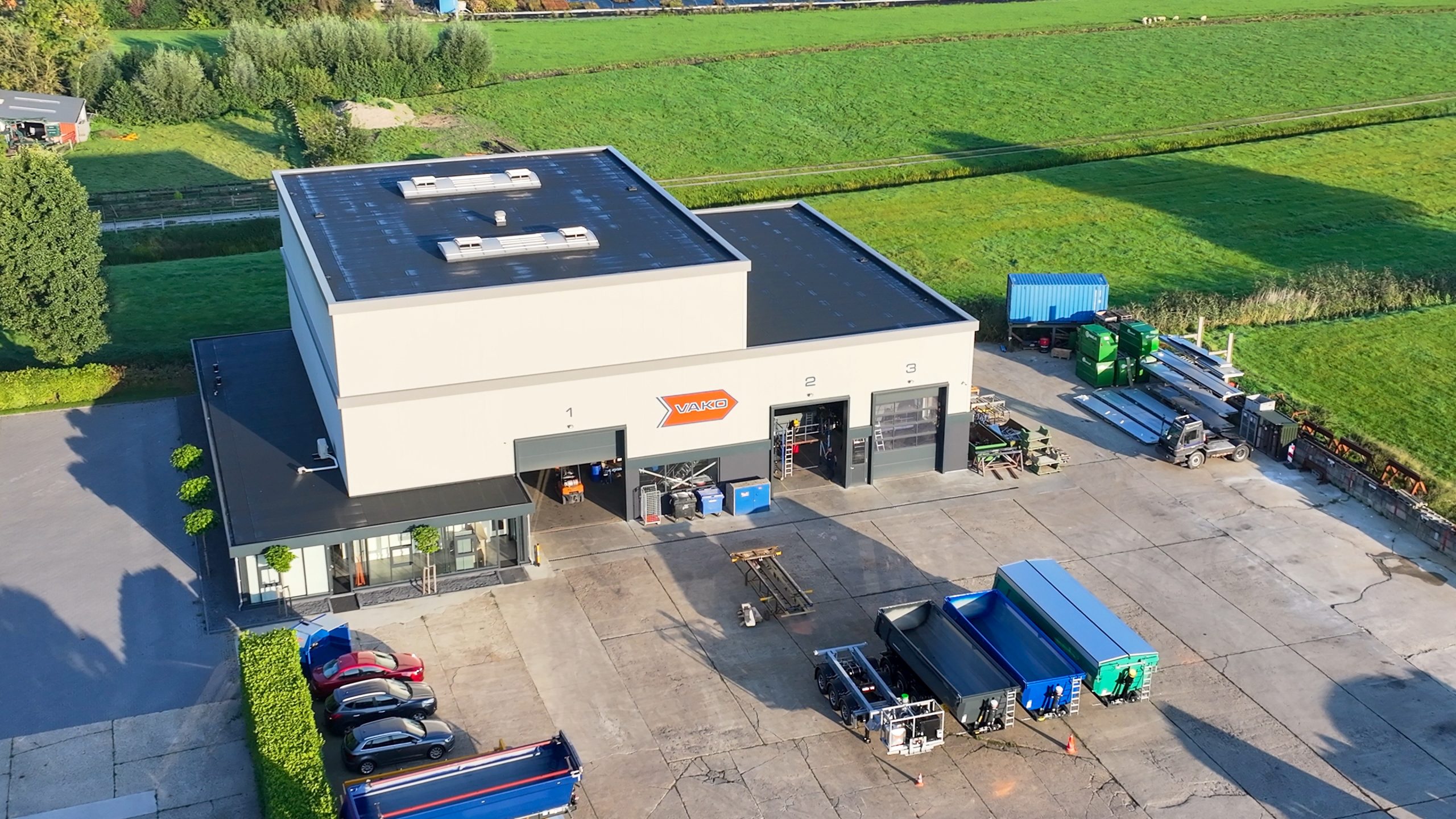
Once the design was finalized, the manufacturing took place at VAKO’s specialized facilities in The Netherlands. Each component, from the high-tensile steel frame to the precision-engineered hydraulic cylinders, was subjected to rigorous quality checks. This phase also included the integration of safety features such as load-holding valves, which prevent the load from falling in the event of a hydraulic hose failure, reflecting VAKO’s commitment to the Machinery Directive.
Deployment and Training
Following manufacture, the MSF01 underwent comprehensive factory acceptance testing (FAT). This involved loaded trials to verify the speed, stability, and control of the vertical positioning system. Once performance was validated, the unit was delivered to the client’s site for operational integration. VAKO provided hands-on training for the client’s operators, focusing on the safe use of the hydraulic controls and the correct procedures for securing the filters.
The deployment phase also included fine-tuning the system’s performance in the field. VAKO engineers monitored the first several installations to ensure that the MSF01 integrated seamlessly with the site’s existing logistics. This end-to-end support ensures that the transition to the new automated system is smooth and that the client begins realizing the ROI benefits immediately upon commissioning.
Methodology
VAKO Transport Systems B.V. employs a “Bespoke Modular” methodology. This approach combines the reliability of proven, standardized components with the flexibility of custom engineering. By using a modular base for the MSF01, VAKO can maintain high manufacturing standards, to meet the unique height, weight, and diameter requirements of the client’s carbon filters. This methodology reduces lead times and ensures that each solution is “tried and tested” at its core.
The engineering process is data-driven, utilizing modern simulation tools to predict performance under various load conditions. VAKO’s methodology also emphasizes “Design for Safety,” where regulatory compliance is integrated into the initial sketches rather than added as an afterthought. This proactive stance ensures that the final product is not only efficient but also fully compliant with the evolving landscape of European industrial regulations.
Results Overview
Operational Efficiency Gains
The integration of the MSF01 has resulted in a radical transformation of the client’s logistics operations. The most immediate result was the reduction in the total time required to swap a carbon filter unit. Previously a day-long event involving multiple contractors, the process is now a routine task that can be completed in under an hour. This drastic improvement in speed allows the client to respond more effectively to maintenance needs and environmental monitoring requirements.
By bringing the vertical positioning capability in-house via the VAKO trailer, the client has gained full control over their schedule. They are no longer dependent on the availability of external crane operators, who often require weeks of notice. This independence has streamlined the entire supply chain, from the filter manufacturer to the end-use industrial site, resulting in a more agile and responsive automation workflow.
Safety and Risk Mitigation
From a safety perspective, the MSF01 has eliminated the “danger zone” associated with traditional lifting. The automated vertical positioning is conducted with precision and stability that human-operated cranes struggle to match in tight industrial spaces.
The use of the MSF01 also simplifies compliance reporting. Because the system is a single, certified piece of equipment, the client only needs to maintain one set of inspection records rather than coordinating safety certifications for various temporary lifting rigs. This simplification of the safety management system represents a long-term qualitative benefit for the organization’s administrative and health-and-safety departments.
Key Metrics & Outcomes
Total setup & positioning time
Personnel required per operation
External equipment hire costs
Wait time for crane scheduling
The quantitative data clearly illustrates the financial and operational impact of the VAKO solution. The elimination of crane hire costs alone provides a rapid payback period on the capital investment. Furthermore, the 90% reduction in setup time directly correlates to increased plant uptime, as the filtration systems can be returned to service significantly faster than before.
Before vs After Comparison
The Before Scenario
In the “Before” scenario, the logistics process was fragmented. A standard flatbed trailer would deliver the filter horizontally. A separate mobile crane would arrive, requiring significant space to deploy its stabilizers. Workers would then manually attach rigging to the filter, a process fraught with risk. The coordination between the truck driver, crane operator, and site crew was complex and prone to delays. If the crane was late, the truck sat idle; if the truck was late, the crane fees still accrued.
The After Scenario
In the “After” scenario with VAKO Transport Systems B.V., the process is a single, continuous motion. The MSF01 arrives at the site, the operator activates the hydraulic system from the safety of the remote, and the filter is moved into the vertical position directly from the trailer. There is no uncoupling, no separate crane, and no manual rigging. The footprint required for the operation is only slightly larger than the trailer itself, allowing for deployment in confined industrial areas where a crane could never operate.
Visual Highlights
The MSF01 is a testament to robust industrial design. Its chassis is constructed from high-strength steel, featuring a reinforced rear section specifically engineered to handle the pivot point stresses during vertical loading. The hydraulic cylinders are oversized for the application, ensuring that they operate well within their thermal and pressure limits even during the most demanding lifts. The system’s “power-on-demand” feature ensures that energy is used efficiently, only drawing power during the actual lifting and lowering cycles.
The sleek, low-profile design of the trailer allows for easy navigation through urban environments and tight industrial gates, ensuring maximum accessibility. Integrated LED lighting and high-visibility markers enhance safety during night operations or in low-visibility industrial conditions common in Europe.
Key Insights
The Value of Mobility
One of the key insights from this project is that mobility is the ultimate solution to logistics bottlenecks. By turning a static installation tool, the crane, into a mobile transport feature, the MSF01, the entire value chain is compressed. Companies in the Machinery & Industrial Automation sector should prioritize multi-functional equipment that reduces the number of “moving parts” in their logistical planning. This project proved that vertical positioning is not just a lifting problem; it is a transport opportunity.
Strategic Resource Allocation
The project also highlighted how automation allows for better human resource allocation. Instead of having five workers tied up in a high-risk lifting operation for half a day, those personnel are now free to focus on the technical aspects of the filtration system maintenance itself. This shift from manual labor to technical oversight is a hallmark of the modern industrial era and is made possible by the innovation provided by VAKO Transport Systems B.V.
Success Factors
The success of the MSF01 project can be attributed to VAKO’s deep understanding of hydraulic precision and structural engineering. The ability to tilt 30 tonnes to a 90-degree angle with millimeter precision requires more than just raw power; it requires sophisticated control systems. VAKO’s expertise in this area ensures that the vertical positioning is smooth, preventing any “jolting” that could damage the internal carbon media or the filter’s structural integrity.
Furthermore, VAKO’s reputation as a reliable partner worldwide and in Europe played a crucial role. Our ability to provide local support, spare parts, and engineering consultations gave the client the confidence to invest in a bespoke solution. This combination of technical excellence and a strong European service network defines VAKO as a market leader in the specialized transport sector.
Insights & Analysis
Strategic ROI Analysis
Investing in the MSF01 is not merely a capital expenditure; it is a strategic move to secure margin durability. By eliminating the recurring and inflationary costs of crane rentals, companies can lock in their operational costs and protect their margins from market fluctuations in the construction and plant-hire sectors. Over a 5-to-10-year period, the savings generated by the MSF01 can often fund the purchase of additional units, creating a self-sustaining cycle of efficiency.
Long-Term Asset Value
VAKO’s focus on high-quality materials and compliance with European standards ensures that the MSF01 retains a high residual value. Unlike generic transport equipment that depreciates rapidly, a specialized, certified handling system like the MSF01 is a valuable asset in the industrial market. This long-term value, combined with the immediate operational savings, makes the MSF01 a low-risk, high-reward investment for any large-scale machinery operator.
Recommendations
For companies in the Machinery & Industrial Automation sector, it is recommended to conduct a “Logistics Audit” to identify where external dependencies — such as crane rentals — are causing delays and inflating costs. Transitioning to integrated mobile positioning systems like the VAKO MSF01 should be considered a priority for any facility managing large, vertically oriented components. Furthermore, companies should ensure that any new transport equipment complies with the latest European Machinery Directives to future-proof their operations against tightening safety regulations.
It is also advisable to work with engineering partners who offer bespoke customization. No industrial sites are identical, and a “one-size-fits-all” trailer will rarely provide the maximum possible efficiency. Partnering with VAKO Transport Systems B.V. allows for the development of a transport system that is tailored to the specific dimensions and operational workflows of your business, ensuring the highest possible return on investment.
Conclusion
VAKO Transport Systems B.V. has demonstrated through the MSF01 project that the challenges of industrial logistics can be solved through engineering innovation. By combining transport and vertical positioning into a single, mobile, and automated system, VAKO has provided the Machinery & Industrial Automation sector with a powerful tool for reducing costs and increasing safety. Their commitment to European regulatory standards and high-quality Dutch manufacturing ensures that their partners receive a solution that is as reliable as it is innovative.
As the European industrial landscape continues to demand higher efficiency and greater safety, VAKO stands ready as the premier partner for complex transport challenges. The MSF01 Mobile Silo Loader is more than just a trailer; it is a strategic asset that empowers companies to take control of their logistics, optimize their uptime, and lead their respective industries with confidence. VAKO’s legacy of excellence in the Benelux and across Europe remains the benchmark for the future of industrial container handling.
This case study exemplifies our commitment to engineering innovative solutions that drive efficiency, safety, and sustainability for industry leaders worldwide. We specialize in solving complex bulk material handling challenges across diverse sectors.
We at VAKO Transport Systems B.V. do our best to exceed expectactions. This usually leads to custom-made quality solutions which are future proof, as a response leading to long-term business relationships. Contact VAKO today to transform your transport logistics into a hallmark of European & international engineering excellence.
See how much uptime and crane cost you’re currently losing
Many industrial operations underestimate the financial impact of crane dependency, manual rigging, setup delays, and limited site accessibility. Request a quick analysis based on your operation.
- Estimated setup and positioning time improvement
- Indicative crane hire and labor cost reduction
- ROI indication for switching to mobile vertical positioning
Our engineering team reviews each request manually — expect a response within 24 hours.
Prefer direct contact? Call us at +31 (0) 71 – 341 07 05
Our opening hours: Monday till Friday 08:00 – 17:30 office hours.