Case Study · Coffee Bean Container Transfer Systems · Maritime, Logistics & Supply Chain
Reduce coffee bean container turnaround by 75–85% while virtually eliminating product loss.
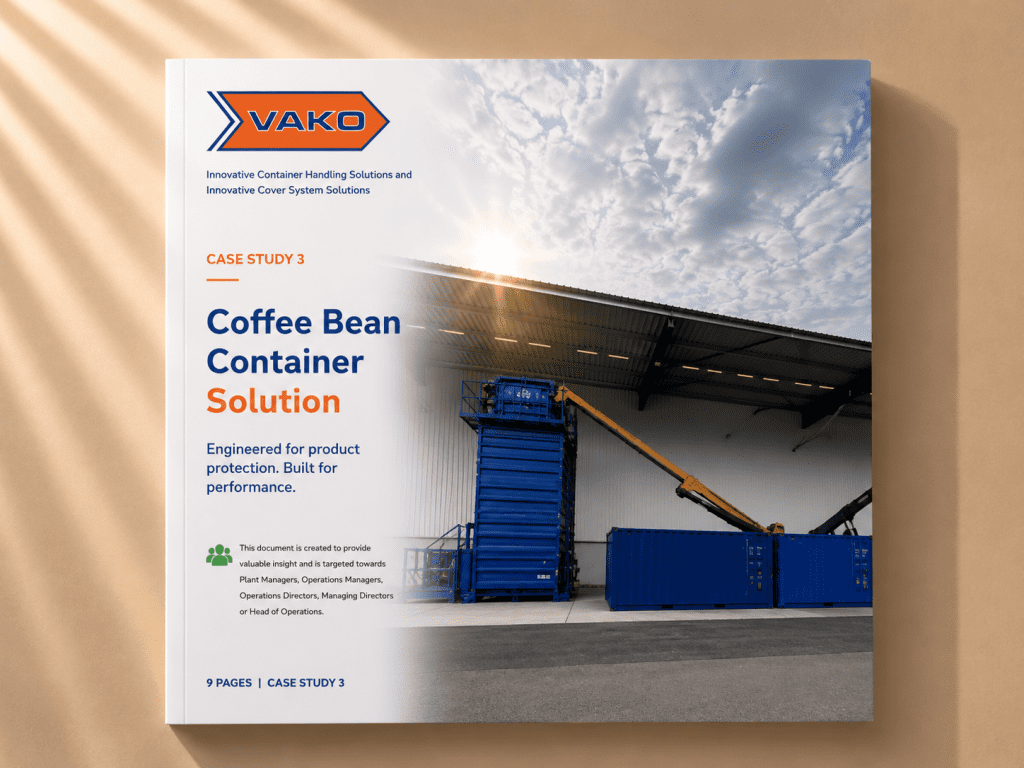
This case study examines the strategic partnership between VAKO Transport Systems B.V. and the global logistics leader, Steinweg Group, to overcome critical bottlenecks in the handling of high-value, sensitive commodities. How much product, time, and compliance risk are you losing in your container transfer process? Get the full breakdown and read it here.
Transferring coffee beans between shipping containers was a process plagued by product spillage, labor intensity, and throughput limitations.
faster turnaround
product loss
labor reduction
What you’ll discover
A practical breakdown of how automated container-to-container transfer improves coffee bean logistics.
Why manual coffee bean transfer limits throughput and increases demurrage risk.
How the SVL20 stationary vertical loader creates an enclosed, automated process.
Faster turnaround, virtual elimination of product loss, lower labor, and improved safety.
Relevant VAKO sectors
Why manual container transfer quietly reduces profitability
The manual transfer of coffee beans was a severe bottleneck. The process was time-consuming, limiting the number of containers that could be processed per day and extending vessel turnaround times.
What changes after automated container-to-container transfer?
Container turnaround time
Product spillage / loss
Labor required per transfer
Safety incident risk
Dust emissions
Continue with the full case study
Below, you’ll find the complete breakdown: subject overview, background and context, problem statement, objectives, challenges, solution overview, key metrics, before-after comparison, insights, recommendations, and final assessment.
Full Case Study
This case study examines the strategic partnership between VAKO Transport Systems B.V. and the global logistics leader, Steinweg Group, to overcome critical bottlenecks in the handling of high-value, sensitive commodities. Faced with the operational challenges of transferring coffee beans between shipping containers — a process plagued by product spillage, labor intensity, and throughput limitations — Steinweg sought an engineered solution that would enhance efficiency, ensure product integrity, and align with stringent international safety and environmental standards.
VAKO Transport Systems B.V. responded with a bespoke container-to-container transfer system centered on its SVL20 stationary vertical loader. This automated solution transformed a traditionally manual and wasteful operation into a precise, enclosed, and rapid process. The implementation resulted in a significant acceleration of container turnaround times, the virtual elimination of product loss, and a dramatic improvement in workplace safety.
Beyond immediate operational gains, this project demonstrates how VAKO enables clients to meet increasingly stringent EU Green Deal, CSRD, and IMO requirements — by eliminating spillage, reducing emissions, and delivering fully enclosed, auditable transfer processes.
This document is created to provide valuable insight and is targeted towards Terminal Managers, Operations Managers, Logistics Managers, Operations Directors & Managing Directors.
Coffee Bean Container Transfer Systems for Steinweg Group – Benelux
Subject Overview
The global maritime logistics chain for soft commodities like coffee beans is a high-stakes environment defined by value preservation and speed. Coffee, as a hygroscopic and easily contaminated organic product, requires meticulous handling from origin to roasting facility. Any delay or physical loss during transshipment directly impacts profitability and can compromise quality. Logistics providers operating outside traditional port terminals, such as Steinweg Group, face unique challenges: they must execute rapid container transfers in multi-purpose logistics hubs without the dedicated infrastructure of a major port, often relying on manual methods that are ill-suited for modern volume and compliance demands.
This sector is simultaneously being reshaped by powerful regulatory drivers. The European Union’s Green Deal and Corporate Sustainability Reporting Directive (CSRD) are pushing companies to quantify and reduce their environmental footprint, including Scope 3 emissions from logistics and waste. Internationally, the IMO’s MARPOL conventions impose strict controls on pollution. For handlers of bulk organic materials, this translates into a pressing need to eliminate spillage, a source of dust and organic waste, and to optimize energy use—moving from diesel-powered, open-air tipping to efficient, enclosed electric systems. The market now demands solutions that are not only faster but also cleaner, safer, and fully auditable.
Background & Context
Steinweg Group, with a history dating back to 1847, is a premier global logistics provider specializing in storage, handling, forwarding, and chartering across more than 65 countries. Unlike a terminal operator with fixed infrastructure, Steinweg’s strength lies in its flexibility and ability to manage complex project cargo and breakbulk logistics for industries including mining, metals, and agriculture. Their operation in Belgium, a key European logistics nexus, required an efficient method for transshipping coffee beans from deep-sea containers to inland transportation units or storage. This “stuffing and stripping” process is a critical link in the supply chain, directly influencing vessel demurrage costs and client satisfaction.
The operational context was defined by space constraints, the need for rapid throughput to meet tight shipping schedules, and the absolute priority of maintaining the purity and quality of the coffee beans. Traditional methods, such as using front-end loaders or manual labor within containers, were proving inadequate. They were slow, led to significant product loss through spillage and dust generation, posed considerable safety risks to personnel, and created environmental compliance concerns. Steinweg required a specialized, reliable partner to engineer a solution that could be integrated seamlessly into their existing logistics flow without requiring terminal-level infrastructure investment.
Problem Statement
Throughput Limitations and Operational Bottlenecks
The manual transfer of coffee beans was a severe bottleneck. The process was time-consuming, limiting the number of containers that could be processed per day and extending vessel turnaround times. This inefficiency created logistical delays downstream, increased demurrage costs for shipping lines and clients, and constrained Steinweg’s capacity to handle growing volumes. In a sector where speed-to-market is a competitive advantage, this slow, labor-dependent method was a significant liability.
Product Spillage, Loss, and Contamination Risk
Open transfer methods resulted in substantial product loss—estimated at several percentage points per container. This spillage represented direct financial loss and created operational hazards, including dust clouds that posed respiratory risks and potential for combustion. Furthermore, the risk of contaminating the high-value coffee beans with foreign materials during manual handling was a constant threat to product integrity and client trust.
Labor Intensity and Worker Safety Concerns
Personnel were required to work in confined spaces, containers, and around heavy machinery. The manual shoveling and sweeping of beans exposed workers to ergonomic injuries, dust inhalation, and the danger of being struck by equipment. This environment was difficult to align with the stringent requirements of the EU Machinery Directive and occupational health and safety frameworks, exposing the operation to regulatory risk and potential liability.
We didn’t just reduce exposure — we structurally removed it.
Objectives
Maximize Operational Speed and Efficiency
The primary objective was to dramatically increase the container processing rate. The solution needed to enable rapid, continuous transfer of coffee beans, minimizing idle time for both the source and destination containers. The goal was to cut turnaround times by several tens of percent, thereby increasing overall terminal throughput and providing a tangible competitive edge to Steinweg’s logistics services.
Eliminate Product Loss and Ensure Integrity
A zero-spillage target was established. The new system had to operate as a fully enclosed transfer process, capturing 100% of the product and preventing any loss due to spillage or dust emission. This was critical not only for cost recovery but also for compliance with environmental regulations concerning particulate matter and organic waste disposal.
Enhance Safety and Regulatory Compliance
The solution had to remove personnel from high-risk areas and automate the core transfer process. It needed to be designed and certified in accordance with the EU Machinery Directive 2006/42/EC, ensuring essential health and safety requirements were met.
Furthermore, the system’s design had to contribute to Steinweg’s broader compliance with the EU Green Deal by reducing energy consumption and eliminating localized pollution.
Challenges
Technical Complexity of Enclosed Transfer
Designing a system that could reliably and completely empty a standard 20-foot shipping container of a free-flowing yet sometimes cohesive bulk solid like coffee beans presented an engineering challenge. The system required precise geometry, effective material flow aids, and robust sealing to prevent dust escape during the transfer, all while ensuring no damage to the container itself.
Integration Into Existing Logistics Flow
The solution could not disrupt Steinweg’s established yard operations. It needed to interface seamlessly with existing container handling equipment, like reach stackers or terminal tractors, and required a footprint that fit within the allocated space. The installation and commissioning process had to be swift to minimize downtime for ongoing logistics activities.
Abrasion and Hygiene Considerations
While not as abrasive as minerals, coffee beans can cause wear on equipment over time. The system’s contact surfaces needed to be durable and easy to clean to prevent cross-contamination between different batches or grades of coffee, adhering to food-grade handling standards where necessary.
Solution Overview
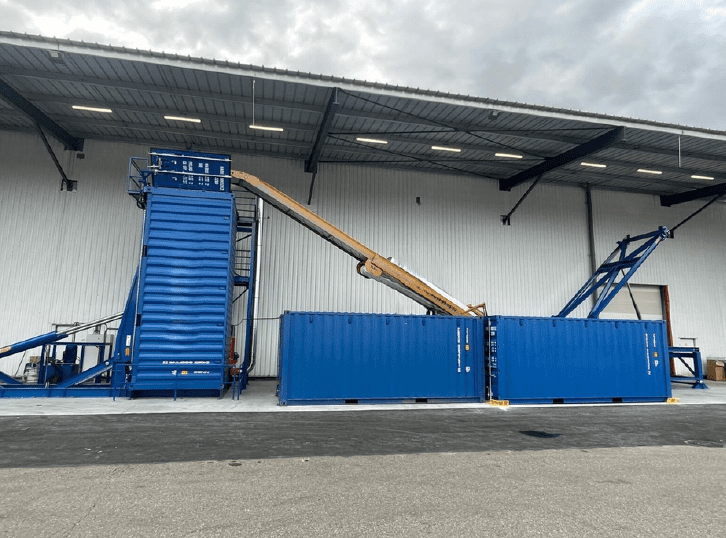
VAKO Transport Systems engineered and supplied a turnkey container-to-container transfer system built around its flagship SVL20 stationary vertical loader. This robust system was specifically configured for Steinweg’s coffee bean handling requirements in Belgium. The core of the solution is a heavy-duty, fully electric vertical lifting frame that securely engages and elevates a 20-foot shipping container. Once raised to the optimal discharge height, the container’s doors are opened, and the beans are funneled through a controlled, enclosed chute directly into the waiting container below.
The system’s intelligence lies in its simplicity and reliability. It features integrated dust suppression seals at transfer points, virtually eliminating particulate emissions. The operation is managed via a user-friendly control panel, allowing a single operator to safely execute the entire transfer process from a remote station. The SVL20’s design prioritizes safety with mechanical locks, emergency stop systems, and guards, ensuring full compliance with the EU Machinery Directive. This solution transformed the transfer point from an open, chaotic, and wasteful operation into a clean, precise, and predictable industrial process.
Key Metrics & Outcomes
Container Turn Around time
Product Spillage / Loss
Labor Required Per Transfer
Safety Incident Risk
Dust Emissions
The metrics are derived by comparing VAKO’s proprietary project data from the Steinweg Group case study against global maritime and logistics benchmarks. Specifically, performance is measured by calculating the “Cycle Time” of VAKO’s automated transfer systems versus traditional manual tipping methods. These figures are further validated by EU Industrial Emissions Directive (2010/75/EU) standards for dust reduction and ISO 12100 for machinery safety.
Before vs After Comparison
The Manual Method (Before)
Labor-intensive, requiring multiple workers inside and around containers. Slow and unpredictable, causing logistical bottlenecks. High product loss through spillage and dust generation. Significant safety risks from confined spaces, dust inhalation, and equipment interaction. Environmentally problematic, with visible dust emissions and waste.
The VAKO Automated System (After)
Single-operator control from a safe, remote location. Fast, consistent, and predictable transfer times. Enclosed process ensures 99.9%+ product capture with no spillage. Safety risks are engineered out through automation and guarding. Clean operation with contained dust, supporting sustainability and regulatory goals.
Lessons Learned
Durability in Bulk Handling is Non-Negotiable
Even with non-abrasive materials like coffee beans, continuous high-volume operation demands robust construction. The project reinforced that investment in high-quality components and wear-resistant materials pays dividends in long-term reliability and reduced total cost of ownership, minimizing unplanned downtime in a 24/7 logistics environment.
Flexibility Drives Long-Term Value
While designed for coffee, the system’s fundamental principle applies to a wide range of free-flowing bulk solids. This insight highlights the importance of designing solutions with adaptability in mind, allowing clients like Steinweg to repurpose the asset for other commodities, thereby protecting and extending their investment.
Success Factors
Technical Reliability and Precision Engineering
The success was rooted in VAKO’s near 20 years of engineering expertise in container dynamics and bulk material flow. The SVL20’s precise and reliable operation built immediate trust with Steinweg’s operational team, ensuring rapid adoption and consistent performance that met stringent daily targets.
Sector-Specific Understanding and Partnership
VAKO’s approach transcended equipment supply to become a true partnership. Understanding Steinweg’s position as a logistics provider, not a terminal, allowed for a solution tailored to their specific operational model and constraints. This collaborative, consultative approach is critical for solving complex industrial challenges.
“Partnering with VAKO Transport Systems transformed a problematic area of our coffee bean logistics. Their SVL20 system provided the engineered solution we needed to eliminate waste, speed up our operations dramatically, and create a much safer working environment for our team. The system’s reliability and clean operation have been outstanding, and it perfectly supports our commitment to sustainable and efficient logistics services. VAKO understood our challenge not just as an equipment need, but as a holistic operational and compliance objective.”
– Project Manager, Steinweg Group
Insights & Analysis
The Steinweg project provides a clear analytical framework for the value of automation in bulk logistics. Financially, the ROI is driven by direct cost savings, reduced labor, recovered product, and indirect gains, increased throughput capacity, reduced demurrage risk. Operationally, it introduces predictability and scalability into a previously variable process. From a market structure perspective, it demonstrates how specialized engineering allows logistics providers to offer differentiated, value-added services that command prime positioning.
For the broader target sectors — from mining and metals to building materials and renewables — the analysis is directly transferable. These industries all face pressure: handling valuable or hazardous bulk materials efficiently, safely, and in compliance with an expanding web of regulations. The automation of transfer points, as exemplified by this case, is not merely an operational upgrade; it is a strategic imperative for building financial strength, mitigating risk, and future-proofing operations in a regulated global market.
Recommendations
Proactively Integrate Regulatory Compliance
Companies handling bulk materials must view regulations like the EU Green Deal and CSRD not as burdens but as blueprints for operational excellence. Investing in enclosed, efficient transfer technology is a direct action to reduce Scope 3 emissions, from waste, improve energy efficiency, and generate the auditable data required for sustainability reporting. VAKO’s solutions are designed with these compliance drivers as core parameters.
Engineer for the Future, Not Just the Present
The collaboration between VAKO Transport Systems B.V. and Steinweg Group stands as a definitive example of how specialized engineering solves industrial challenges. By addressing the core issues of throughput, spillage, and safety with an intelligent, automated container transfer system, VAKO delivered measurable operational and financial benefits while simultaneously advancing the client’s sustainability and compliance agenda.
This case study solidifies VAKO’s being an industry leader in bespoke bulk material handling solutions. For companies across logistics, environmental services, mining, construction, and industrial automation, partnering with VAKO represents a strategic decision to optimize operations. In addition mitigate risk, and build a resilient, future-ready supply chain. VAKO does not just sell equipment; it engineers performance, safety, and compliance into the very fabric of global industrial logistics.
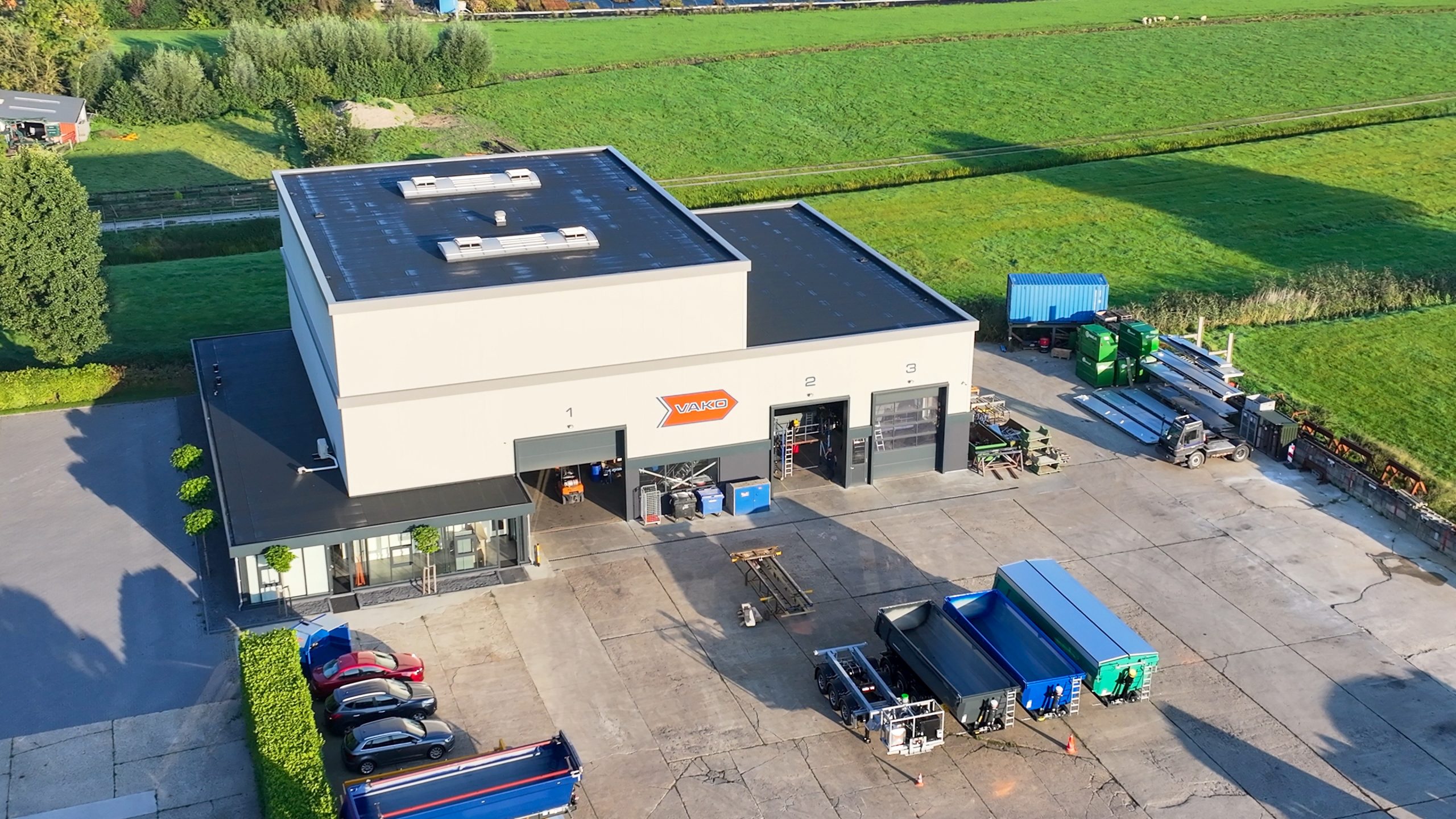
This case study exemplifies our commitment to engineering innovative solutions that drive efficiency, safety, and sustainability for industry leaders worldwide.
We at VAKO Transport Systems B.V. do our best to exceed expectactions. This usually leads to custom-made quality solutions which are future proof, as a response leading to long-term business relationships. Contact VAKO today to transform your transport logistics into a hallmark of European & international engineering excellence.
See how much product, time, and compliance risk you’re currently losing
Many logistics operations underestimate the financial impact of manual transfer, spillage, dust emissions, labor intensity, and vessel turnaround delays. Request a quick analysis based on your operation.
- Estimated container turnaround time improvement
- Indicative product-loss and dust-emission risk assessment
- ROI indication for switching to automated container-to-container transfer
Our engineering team reviews each request manually — expect a response within 24 hours.
Prefer direct contact? Call us at +31 (0) 71 – 341 07 05
Our opening hours: Monday till Friday 08:00 – 17:30 office hours.